Pet Safety – Include In Your Remodeling Plans And Contractor Agreements.
If you’re remodeling with pets in the home, you’re not just managing a construction site—you’re managing chaos, fear, and very real dangers for your furry (or feathered) family members.
Doors left open, strange people in the house, sharp tools on the floor, and toxic chemicals in the air aren’t just stress-inducing—they’re downright dangerous.
That’s why you need a Pet Protection Plan before the first hammer swings. And here’s the kicker: what applies to dogs, cats, and other home critters applies just as much to children. Think of your four-legged kids the way you’d think of toddlers—curious, impulsive, and not at all aware of the hazards hiding in a remodel. We’re not alone in helping you protect your pets – some veterinarians have even set up special boarding programs to keep your pets off-site and safely away from the construction area.
Top Remodeling Risks for Pets – and How to Prevent Them
1. Great Escape Artists
What to watch for: Open doors, gates, and distracted contractors create constant escape opportunities.
Solutions:
- Secure pets in a closed room with a sign reminding workers.
- Set up double-gate “airlock” systems near exits.
- Microchip your pets and add GPS trackers (Whistle, AirTag).
2. Anxiety from Construction Chaos
Big Stressors: Loud drills, saws, and strangers can trigger stress behaviors.
Solutions:
- Create a “quiet room” with white noise or calming music.
- Use vet-approved calming aids like Adaptil or Feliway.
- Provide puzzle toys (KONG Extreme, Outward Hound feeders).
3. Exposure to Chemicals and Tools
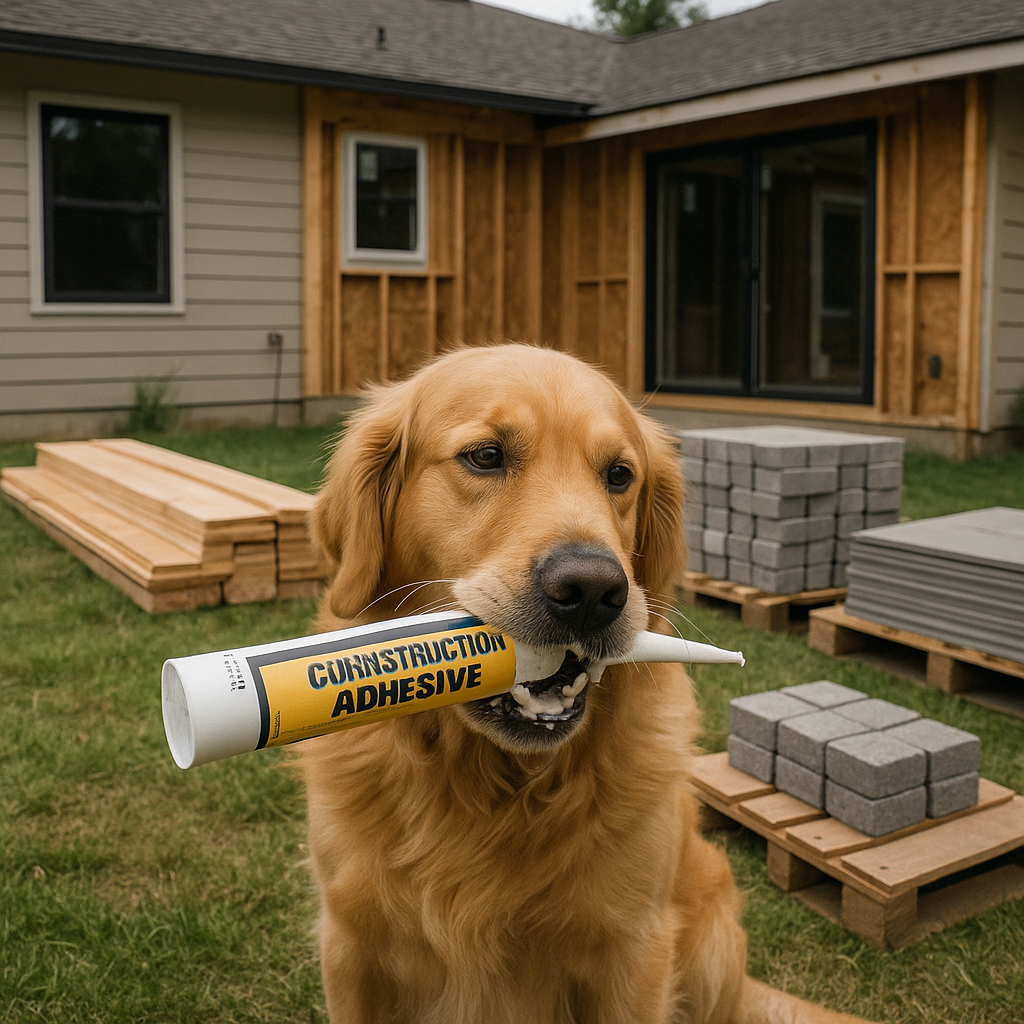
Just Like Humans: Adhesives, paints, solvents, and saw blades can be deadly to pets.
Solutions:
- Choose low-VOC paints and adhesives.
- Require end-of-day cleanup in your contract.
- Store tools and chemicals in locked containers.

Budget for safety provisions, write it into your remodeling agreement, and make their well-being non-negotiable.
4. Potty Routine Disruptions
They Gotta Go When They Gotta Go: Access to their usual spots may be blocked.
Solutions:
- Keep consistent feeding and potty times.
- Create alternate potty areas.
- Use pads or litter attractants indoors if necessary.
5. Accidental Injuries
Pets Don’t Wear Shoes: Nails, screws, and debris get everywhere.
Solutions:
- Inspect floors daily before letting pets in.
- Use protective booties outside if debris is common.
- Require contractors to sweep and magnet-roll at day’s end.
6. Behavioral Meltdowns
Look For Strange Behaviors: Stress can trigger chewing, scratching, digging, or overeating.
Solutions:
- Redirect with appropriate toys.
- Increase exercise and mental stimulation.
7. Boarding May Be Best Safety Option
Sometimes the safest move is relocation. Budget for daycare, boarding, or staying with family if the remodel is large or chaotic.
Common Construction Materials and Their Dangers to Pets (and Kids)
Instead of a long chart, here’s a mobile-friendly breakdown of the most common materials you’ll encounter and how they can jeopardize pet safety (and children).
🎨 Paints & Varnishes
- Dangers: VOC fumes cause nausea/neurological issues; old lead paint can cause tremors, seizures, even death; ingestion of wet paint triggers vomiting or burns.
- Pet Risks: Cats are extremely sensitive to VOCs; birds can die from fumes.
- Precautions: Use low-VOC paints, ventilate aggressively, and keep pets out until dry. Clip paint from fur—never use solvents like turpentine.
🧱 Spackle & Drywall Compounds
- Dangers: May contain ethylene glycol (toxic); sanding dust irritates lungs and stomach.
- Pet Risks: Dogs sometimes eat wet spackle → intestinal blockages; dust worsens allergies.
- Precautions: Confine pets during sanding, clean dust daily, and store spackle out of reach.
🧴 Tile Adhesives & Polyurethane Glues
- Dangers: Isocyanates expand in the stomach if eaten; fumes irritate lungs and eyes.
- Pet Risks: Dogs love the smell—ingestion can require surgery. Birds are especially vulnerable to fumes.
- Precautions: Lock adhesives away, ventilate during use, and keep pets out until fully cured.
🧵 Fiberglass Insulation
- Dangers: Fibers cause skin, eye, and lung irritation; ingestion may cause obstruction.
- Pet Risks: Pets may chew insulation or ingest fibers while grooming.
- Precautions: Keep pets away from exposed insulation; bathe pets if exposed.
🧪 Solvents (Acetone, Mineral Spirits, Turpentine)
- Dangers: Toxic to liver and kidneys; can cause neurological damage; highly flammable.
- Pet Risks: Pets may lick spills or contaminated fur; inhalation is deadly for small pets and birds.
- Precautions: Use in ventilated spaces, store securely, never apply solvents to pets.
🌲 Wood Dust & Sawdust
- Dangers: Irritates lungs and digestive systems; dust from treated wood adds chemicals.
- Pet Risks: Pets may inhale or ingest dust.
- Precautions: Vacuum daily, block access, and use wet cutting methods.
🪨 Concrete & Silica Dust
- Dangers: Fine particles can cause silicosis, asthma, and even cancer with long exposure.
- Pet Risks: Inhaled dust or ingestion via grooming leads to respiratory or digestive illness.
- Precautions: Use wet cutting/HEPA vacuums, confine pets away from dust, clean fur if exposed.
Contractor Clause Alert: Put Pet’s Safety in Writing
Here’s where most pet parents miss the mark: you can’t rely on contractors to “just be careful.” If you want safety to be taken seriously, spell it out in your contract.
Provisions to include:
- Temporary fencing if materials are staged in pet-accessible yards.
- Automatic gate closers to stop escapes.
- Restricted zones for chemical and tool storage.
- Daily cleanup requirements before pets are allowed back.
Yes, this may add cost—but the cost of a poisoned pet or an emergency vet bill is far worse. And remember: the same risks apply to toddlers.
Must-Have Emergency Info
- Post your vet’s number in visible places.
- Post your own number near the work zone—subs rarely have it.
- Poison control hotlines:
- ASPCA 24/7 Poison Control: 888-426-4435
- Pet Poison Helpline: 855-764-7661
Living in a Construction Zone: Pro Tips
- Create new pet rules (no free roaming, no yard without supervision).
- Keep familiar blankets, toys, and beds in the safe room.
- Ventilate aggressively when using paints or adhesives.
- Talk to your vet about calming aids or allergy support.
Final Word
Remodeling is stressful for you—but for pets, it can feel like Armageddon. Between noise, strangers, toxic dust, and open doors, pet safety must be part of the remodel plan, not an afterthought.
By containing your pets, keeping routines consistent, and spelling out contractor responsibilities in writing, you’ll protect your pets and your kids from trauma and danger.
So: budget for pet safety, write it into your agreement, and make their well-being non-negotiable. Because the only tail between your legs should be your dog’s happy wag when the remodel is finally done.
📘 Want the full list of pet safety strategies during your renovation?
Take a deeper dive into Rebo’s Remodeling Rules—a must-read for homeowners who care as much about their pets as their projects.
Your remodel shouldn’t come at the cost of pet safety or comfort.